


Weapon Systems Software
As the technological possibilities of today develop, the dependence of weapon systems on software increases further. As a result, the mission success of the weapon system becomes directly proportional to the success of the software it contains. Although the process of software development seems to be the same whether it is a weapon system or a system developed for another purpose, there are major differences in terms of administration.
GMKA Defense is willing to share its knowledge, experience and understanding of project management acquired with the software for unmanned shooting weapons it has developed so far in new projects.
The studies carried out within this scope consist of the following subsections:
• Air Defense Software
• Sensor Systems Software
• Communication and Antenna Management Units
• Air Defense Weapon System Components
• User Interface Software
• Signal Processing Systems
• Signal/Image Analysis and Processing
• Video Processing
• Imaging and Pattern Recognition
• Motion Analyses
• Data Control Systems
• Data Control and Display Units
• Data Control Software
• Data Control System Power Units
• Serial Channel-Ethernet Communication Software
COMMAND AND CONTROL SOFTWARE
Given the complex, non-linear chaotic nature of the combat environment accurate and timely decision-making is virtually impossible. There is a need for systems that increase situational awareness, reveal the big picture of the battlefield, and perform all the crucial information exchange not only within their own area of interest but across the entire coalition or joint battlespace, in order to enable leaders to make effective decisions. When there is so much information that can be collected from the battlefield, the need for command and control software that will process this information, filter and present the most important ones to the use of decision makers, thus ensuring the complete perception and definition of the battlefield, has increased more than ever.

GMKA develops products for command, control, communication, computer, and intelligence systems that increase operational flexibility, shorten the organization time, are easy to access, easy to use, and meet all and all needs.
Some of the software developed within this scope are:
• Firing Support Software
• Target Management
• User Message Management
• Data Conversion between Different Devices/Message Systems
• Firing Management
• Mission Planning Software
• GIS-Based Mission Planning
• Mission Analyses
• Database Management Processes
• Sensor Coverage Analyzes
• Graphical Analyses
• Mission Data Transfer/Retrieval
• Component Development
• Mission Analysis Software
MARINE SYSTEMS SOFTWARE
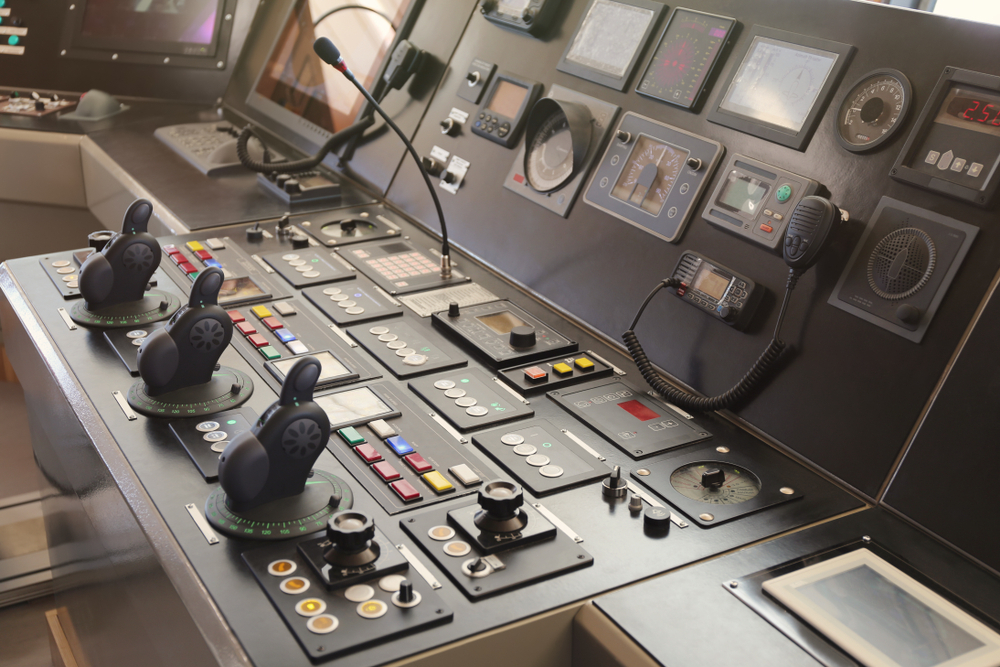
GMKA Defense develops software in many areas from naval battle management systems on ships to communication systems. The data management software GMKA has developed fulfills the data integration functions needed within the scope of special-purpose mission systems in support ships such as Scientific Research, Search/Rescue, and Mine Hunting.
The software collects data from different sensors aboard the ship and distribute them in formats suitable formats for the operation of special-purpose mission systems. In addition, the synchronization of the data required for the mission systems to work in harmony with each other is among the tasks of the software. All data collected and distributed are recorded.
The ongoing software development by GMKA has been designed for the following floating units:
• Submarine Rescue Mother Ship
• Rescue and Towing Ship
• Seismic Research Ship
• Frigate
• Corvette
• Patrol Boats
• Mine Ship
• Submarine
• Support Ships
• Maritime Patrol Aircraft
• Marine Helicopters
AVIONICS AND EMBEDDED SYSTEM SOFTWARE

Avionics software is the embedded software used in the electronic systems of aircraft, artificial satellites and spacecraft whose safety and reliability needs are determined legally. The difference between avionic embedded software and conventional embedded software is that the development process is legally defined and optimized in terms of safety. GMKA aims to achieve numerous successes in this field by developing software in accordance with international standards as well.
Some of the works by GMKA specific to this field are: Real-time operating systems, safety-critical system software, embedded system software, hardware and integration, development of a symbology library, GIS-based mission planning, mission analyses, database management operations, sensor coverage analysis, graphical analyses, mission data transfer/retrieval.
TESTING SOFTWARE AND SERVICES

Especially in research and development projects, the environmental components that a completed component must interact with are often unfinished. Having to wait for the entire project to be completed makes it almost impossible for contractors to fulfill their responsibilities to the requesting authority. In some cases, the test service has to be performed by third parties due to the nature of the business.
GMKA contributes to the realization of projects with minimum errors and highest performance with the test environments it creates with its experienced staff, which has been used only in this field for a long time. The test team, which consists of engineers, analyzes system and software requirements, develops simulators and emulators instead of non-existent components, creates a test environment close to the real thing and contributes to the completion of the tests on time.
Some of the projects for which only testing services are provided by a third party are listed below.
• Test Simulators and Service of Firing Support Systems
• Multi-Barrel Rocket Launcher Test Simulators and Service
• Air Defense Systems Test Simulators and Service
COMBAT MANAGEMENT SYSTEMS

COMMAND CONTROL SOFTWARE ARCHITECTURE – 1
• The Smart Mobile Weapon Platform (AKMOS-Akıllı Mobil Silah Platformu) consists of 6 subsystems that are independent and integrated with each other. It contributes to ensuring maximum continuity in case of possible malfunctions during field operation and reducing costs by accelerating the maintenance process through its modular structure. The flexible architecture enables agile solutions to be offered in the development of possible new requests in the future.
A – AKMOS RRS & ONT
• AKMOS RRS (RF Radar System) transmits all objects detected in the sector under surveillance to AKMOS TKS (Basic Control System) with latitude, longitude and altitude information by passive listening with 12 directional antennas.
• By supporting two-way communication, RRS also offers the opportunity to query, delivering a list of active detected objects at any given time.
• When the required distance is reached, the targets determined by RRS are automatically tracked visually, by distinguishing people, animals and vehicles with the ONT (Optical Object Recognition) system.
B – AKMOS TKS
• AKMOS TKS (Main Control System) acts as the interface layer that will control the other 5 subsystems and ensure that they are integrated with each other in a controlled manner. It informs the subsystems of AKMOS PYS (Platform Management System) and AKMOS SYS (Simulation Management System) by recording the information from RRS in the central database.
• Users log in to AKMOS via TKS (Main Control System). Every action performed is entered as a trace in the database on TKS. Parametric settings of TKS and other subsystems are also managed through TKS.
• For all targets detected, tracked, blocked etc. at any time, past event records can be viewed together with visual evidence and retrieved as a report via TKS.
COMMAND CONTROL SOFTWARE ARCHITECTURE – 2
C – AKMOS PYS (Platform Management System)
• AKMOS PYS (Platform Management System) calculates the angle that the body should rotate by comparing the coordinate information received from TKS with the coordinate information where it is positioned, and takes the relevant position by moving on the vertical axis. It positions the head according to the relevant target coordinate on the horizontal axis based on the height information.
D – AKMOS SYS (Simulation Management System)
• AKMOS SYS (Simulation Management System) analyzes the detected object by making 3 different categorizations with the information from RRS. After the first detection, it automatically makes the friend/foe decision according to the communication frequency values of the relevant object from RRS and the visual analysis results from AKMOS KYS (Camera Management System). Different colors on the tracking screen allows the relevant distinction to be made easily.
E – AKMOS KYS (Camera Management System)
• AKMOS KYS (Camera Management System) constantly checks for the presence of any object in the line of sight. Based on the information from RRS, PYS turns the body and the head in the relevant direction, finds the object by performing detailed visual analysis with smart algorithms and runs the visual tracking process by framing it.
• It can automatically terminate friendly tracking according to the friend/foe information coming from SYS, and can visually track multiple targets at the same time.
• The recording module in KYS independently records continuous videos, allowing the target detection and interception process to be monitored retrospectively if needed.
F – AKMOS AKS (Firing Management System)
• AKMOS AKS (Firing Management System) can be used in automatic or manual mode. During the visual tracking of the target, which is identified as an enemy by SYS, the target is repressed/hit/destroyed by making single/serial/curtain shots.
• During the shooting process, the estimated distance as well as the aiming direction in the horizontal and vertical axes is automatically calculated, and positioning to the most suitable firing position is ensured.

WORK PACKAGE ACTIVITIES – 1
• The RRS control software stores the relevant information as raw data when there is actually a detection from the information obtained by emitting radio signals. It quickly analyzes the raw data by creating multiple threads within itself, and as soon as it decides that there is a real detection, it marks it on its own database and informs the TKS system.
• The RRS system also offers a service that can make a retrospective query based on date range, coordinate information and altitude data, which can be used by other systems as needed. The format of the information transmitted during detection and the format of the query service are operated using the same data structure, thus AKMOS presents an efficient operating model while preserving its internal standards.
• The ONT submodule classifies the entities that can be viewed as objects at a certain distance as human, animal, vehicle and provides automatic visual tracking through the artificial intelligence-supported system.
WORK PACKAGE ACTIVITIES – 2
• TKS infrastructure consists entirely of computer systems. In order to manage the integration process with other systems, the central database server and the application server that monitors the work processes are housed in TKS.
• TKS system database and application servers are operated as separate physical machines, each in clusters of 3. In active-active clustering logic, every data written to the main database server is also written to the copy database server. In parallel, the same information is transferred to the 3rd database server as a passive backup.
• In case of a possible failure, AKMOS system continues to operate at maximum level.
• The application server cluster also hosts 3 physical machines. Incoming requests to the 2 physical machines are distributed in a way that load balances according to the density. The 3rd machine is positioned separately to provide services for user management, reporting and editing other additional settings, apart from the main task of target detection and blocking. Managing the target detection and blocking process and other operational activities over separate servers guarantees the highest level of continuity in case of possible failures.
WORK PACKAGE ACTIVITIES – 3
• The TKS software can be used by logging in via any web browser on tablet/desktop/laptop computers with its web-based interface. The system is based on role and authorization mechanism. The user can act in accordance with the role assigned to them and the authorizations of the role.
• The final status of the integration with other systems, and event records can be monitored via TKS. The last location information of the platform, target detection image on the cameras, electronic jamming system settings and main control functionalities are monitored and managed via TKS.
• TKS communicates with other systems over the internal network that is not open to the outside. It does not contain the PYS, KYS and AKS systems directly embedded in itself. This architecture makes it possible for any subsystem to work without affecting the others in case of failure, while also contributing to software performance.
WORK PACKAGE ACTIVITIES – 4
• PYS provides manual or automatic control of the carrier platform with the keyboard/joystick. It runs on application servers on the TKS system. It constantly updates the final location information on TKS. By communicating over TCP/UDP protocols, it continues to operate on the internal connection ready for duty at any time.
• It uses the coordinate values transmitted to the PYS to mathematically calculate the angle values that it needs to rotate, considering its own fixed position information mathematically, and automatically triggers the platform by generating commands to rapidly move to the new position.
WORK PACKAGE ACTIVITIES – 5
• SYS examines the details of the relevant detection based on the object information received from RRS and transmitted from TKS, makes friend/foe analysis and displays this information by working on a separate server on its own monitor. In the cluster consisting of 2 physical machines, the detections made in a redundant manner are simulated and displayed on a separate LCD monitor screen, operating in the Active-Active logic.
• The software running on the SYS displays the map information of the physical location. Objects detected on the map are represented with blue, red or green colors according to the analysis results. As they move and change their positions, they are shown in their new positions on the map in line with the information coming from RRS and TKS.
• In the first detection, it is directly displayed with blue color. When it is clear that the detection is friendly, it is shown in green; it is shown in red if it is understood that the detection is hostile. The current coordinate information of each target on the map is indicated as civil / military coordinate values, altitude information and circulation route.
WORK PACKAGE ACTIVITIES – 6
• AKMOS AKS (Firing Management System) can be used in automatic or manual mode. During the visual tracking of the target, which is identified as an enemy by SYS, the target is repressed/hit/destroyed by making single/serial/curtain shots.
• During the shooting process, the estimated distance as well as the aiming direction in the horizontal and vertical axes is automatically calculated, and positioning to the most suitable firing position is ensured.