


Regardless of the degree of interest in the subject, the fact that everyone accepts in today’s world is that wars now take place in the realm of electronic warfare (EW). Taking the approach that everything is electronic, it is inevitable to think that wars and conflicts will also be electronic. Electronic Warfare (EW) can be broadly defined as military actions aimed at controlling the electromagnetic spectrum (EMS). In even broader terms EW can be defined as the use of electronic systems and techniques for the purpose of:
• Detection of the presence and layout of electronic systems of threatening forces,
• Destruction or mitigation of their effectiveness,
• Prevention of threat detection or neutralization of friendly forces’ electronic systems
EH is also defined as the whole of scientific, technological and military activities to ensure that friendly troops to use the electromagnetic spectrum (EMS) effectively, to prevent or to minimize the use by the enemy. The activities carried out within this scope are as follows:
• Electronic Support (ES): It is the process of detecting, classifying, identifying and determining the location of electronic system broadcasts belonging to friendly or enemy troops.
• Electronic Attack (EA): It aims to interfere with the systems of the enemy by using electromagnetic energy to damage or temporarily neutralize them.
• Electronic Protection (EP): It is known as the techniques and tactics used to protect the electronic systems of friendly troops from EA. It is categorized into three classes.
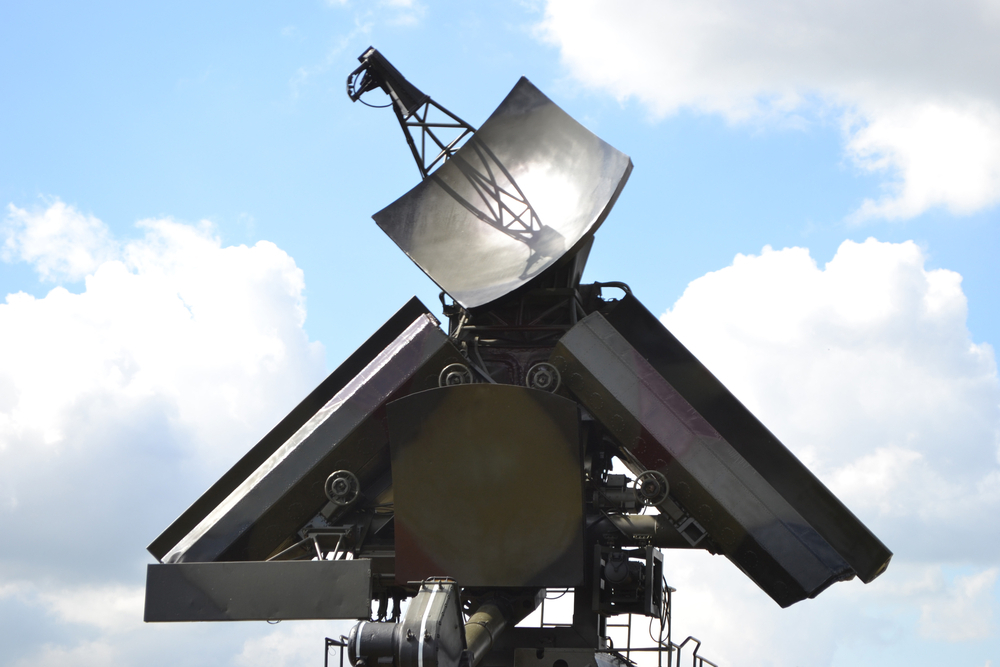
ELECTRONIC WARFARE IN THE FUTURE
It is a fact that rapid advances in technology also affect the future of EW. It is known that some special EW applications have started to be used for any platforms where low visibility is desired. For example, within the scope of 5th Generation Aircraft Technology, low visibility parameters are significantly supported with high output power and long-range self-protection applications. In this sense, the strength of the EW has begun to show itself not with the urgent applications needed at the last moment, but with the special techniques at every stage of the tactical operation. Today, the synergy among EW techniques and artificial intelligence can lead to more effective results. Therefore, it has become clearer how vital it is to generate an Electronic Order of Battle (EOB) regarding friendly and enemy assets, especially in peace conditions. For the correct assessment of EOB, the existence of certain systems can be revealed by analyzing many meaningless signals with the help of software. With software capable of deeper penetration in these systems, friendly platforms can generate the algorithms they need to protect themselves in the operational environment or experiment with simulation. This is sufficient evidence to show that there is no limit to the point reached in terms of EW.
Today, EW is critically needed to ensure that friendly troops have access to information while denying it to the enemy. Due to the advances in weapon technology, there is no longer a need to concentrate the EW energy to render the enemy’s defense systems unusable in an offensive operation.
For this reason, it should not be ignored that instead of EW applications, the direct destruction strategy of these systems from greater distances may be preferred. It is envisaged that EW will be used predominantly in special missions and platforms such as 5th Generation Aircraft, which are considered higher-value aircrafts, and AWACS and frigates, which are critical for command and control, may need them more.
Technologies that will be needed for more effective use of EW in the future:
- Systems with high computational power, smaller in size and weight, and lower in cost
- Multifunctional and reprogrammable systems
- Broad spectrum systems
- ET directed energy weapons
- Merging EW and cyber warfare into a common concept
- Cognitive and artificial intelligence-based EW systems
- In addition to classical systems, EW systems suitable for swarm intelligence and concept
By simulating the planning and execution phases of EW, GMKA provides decision makers with a visionary virtual operational environment. At the same time, it transfers accurate, complete and uninterrupted information securely to all users who need it on the battlefield. In the meantime, it supports the operation at a high level with the tactical data links infrastructure it offers and the command and control system software, which is the highest level in the operation of this structure. GMKA also continues its efforts to offer all kinds of innovations in software technology that EW can provide in accordance with future concepts, as well as the capabilities it provides to the end user in the appropriate and effective programming of EW systems.
Modern wars begin unsee…
The military uses the invisible electromagnetic spectrum to detect, deceive and disrupt the enemy while protecting friendly forces. Controlling the spectrum has become increasingly important as adversaries become more capable and threats more sophisticated.
Staying ahead in this age requires capabilities of a new generation of talent. GMKA Defense’s expertise in electronic warfare, cyber and electromagnetic maneuver warfare covers all domains such as land, sea, air and electromagnetic spectrum. Spectral gives personnel an edge over the spectrum and make faster, more informed decisions.
Spectrum edge starts her…
Modern electronic warfare systems are extremely complex and require accurate replication of threat environments. The combat electromagnetic environment simulator system faithfully simulates war conditions.
AIRBORNE ELECTRONIC WARFARE
Up in the air, electronic warfare systems help ensure that attack aircraft reach their targets and return home safely. Survival and targeting converge on the electromagnetic spectrum. GMKA addresses advanced electronic warfare threats. Situational awareness is critical to air supremacy, and airborne electronic warfare systems allow personnel to disrupt and deceive a wide variety of electronic systems.

SELF-PROTECTION: INFRARED AND RADIO FREQUENCY
As aviators face both infrared and radio frequency threats, GMKA aims to modernize our country by supplying the latest systems in self-protection capabilities across the spectrum.
The open systems architecture offers the bandwidth needed to detect and defeat the most complex RF threats, including agile air defense systems. Its systems and technologies, including features for personnel jets, cargo aircraft, and rotary-wing aircraft, can be deployed on nearly any platform. Next-generation electronic warfare provides full-spectrum radar warning, threat identification and advanced countermeasure capabilities. Coupled with agile beam radar, the pulse-to-pulse interoperability and electronic warfare package configuration can be scaled to meet the operational needs of international partners in an internal or segmented configuration.

In addition, operators of tactical air transport aircraft can benefit from the ability to safely maneuver in contentious spectrum environments thanks to the radio frequency countermeasure system.
Radar Warning Receiver / Electronic Warfare Management System for rotary-wing aircraft maximizes survivability by improving aircrew situational awareness through the interaction of all on-board sensors and countermeasures.
We intend to provide optical laser-based systems that detect infrared threats and protect aircraft (large and small fixed-wing, rotary-wing and tilt-wing platforms) from advanced missile threats. This family of self-protection programs includes the Directional Infrared Countermeasure and Common Infrared Countermeasure Systems.

NAVAL ELECTRONIC WARFARE
GMKA pushes technological boundaries in the design and development of maritime systems. GMKA has experience in electromagnetics, end-to-end system integration of advanced engineering and all subdivisions. It is engaged in a wide range of innovative research, science and technology.
As it continues to shape the future battlefield, it protects surface ships from anti-ship missiles, providing early detection, signal analysis and threat warning. Naval Forces Integrated Warfare Systems meet electronic attack and emergency operational needs.
NAVAL INFORMATION WARFARE
Information warfare is a strategy for using and managing information to gain a competitive advantage in both offensive and defensive operations. Tactically for the personnel, receiving actionable intelligence at the appropriate time is crucial to the success of the mission. Today in the maritime domain, critical data is collected; and then analyzed at a shore-based facility.
DIGITAL TRANSFORMATION
As the Navy moves towards digital data transformation to outpace emerging threats, it must use common, open and interchangeable data formats to gain a decisive advantage and accelerate the sharing of target information. In a battlefield where data is a commodity, this commonality will be key to creating a single environment unifying all platforms, sensors and weapon systems to run distributed and fully integrated naval operations.

GAINING MORE OFFENSIVE CAPABILITY
The full power of the naval electronic warfare package with the offensive capability of the surface electronic warfare development program will be used to detect, reject, deceive and defeat threats. With greater use of non-kinetic solutions such as advanced electronic jamming, cyber operations, and directed energy, more anti-ship missiles can be used for power projection rather than self-defense. This results in both more offensive and enhanced defensive capability for optimal warfare.
MULTI-DOMAIN INFORMATION WARFARE
GMKA addresses the detection, identification, tracking and defeat aspects of the non-kinetic unmanned weapon systems kill chain. Multifunctional, software-defined and fully configurable, every system can be optimized for every mission requirement. Software and hardware are prepared using common architectures. Counter-communication disrupts and rejects enemy command and control networks. Telemetry, radio-controlled improvised explosive devices, and small unmanned aircraft systems provide flexibility to support needs as the operational concept evolves.
Counter communication solutions detect signals of interest and detect threats by scanning the environment for potential radio frequency and through field configurable parameters. Intelligent algorithms check whether the signal is a known threat. If confirmed, an audible and visual alarm alert the operator. If the system is operating in a passive mode; an operator will positively identify the threat after a detection using the multi-sensor target verification feature. Identification and tracking capabilities offer personnel to interrogate and resolve the threat.
VISION FOR THE FUTURE
As adversaries become more capable and threats more complex, GMKA is designing smarter and more agile systems.
DESIGNING FUTURE-FRIENDLY SYSTEMS
The digital architecture equation and electronic warfare packages can now perform multiple functions. It can support various mission sets, software and components.