


Maintaining the tempo of combat, support, and service elements is essential for the development of operations. In contemporary battles, sharpshooters play a significant role, especially in complex areas such as terrains with asymmetric effects or urban environments.
Within the sharpshooting system, there are technological factors such as weapons, ammunition, and equipment, as well as experiential factors such as leadership, planning, training, and sharpshooter qualifications, which add value.
Wind, light, air temperature, humidity, pressure, altitude, and position all affect both the bullet and the sharpshooter.
- Wind
- Light
- Temperature
- Humidity
- Altitude
- Incline
- Distance
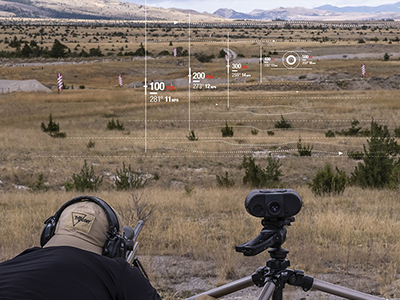
Wind is a significant challenge in sharpshooting. Improperly calculated wind can lead to errors in aiming or failures in shots.
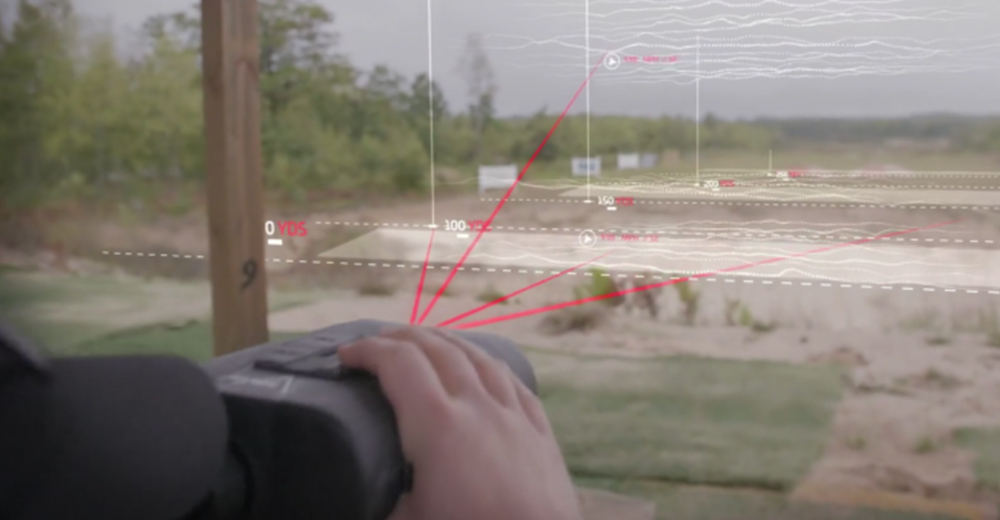
The closer the wind is to the sharpshooter, the more it affects the bullet. A 3D wind mapping rangefinder can perform 3D wind calculations at various points within a distance range of 500 meters between the sharpshooter and the target.
The rangefinder sends a Lidar signal, which is partially reflected by particulate matter in the air. The movement of these particles is enough to slightly shift the wavelength of the returning laser energy due to the Doppler effect. The rangefinder can read these movements in three dimensions at six points between you and the target. Head/tailwinds and crosswinds are data that can be used to adjust your target.Key features of the 3D wind mapping rangefinder include:
- Assisting in calculating bullet velocity by knowing the range
- Capability to calculate under challenging weather conditions
- Identifying long-range targets
- Simple intuitive control
- Superior battery life
Light does not affect the trajectory of the bullet.
However, it does impact the sharpshooter’s ability to see the target through the scope. Excessive light coming from the right or left can affect shot dispersion in the horizontal plane. To address this issue, the sharpshooter needs to record shots taken in different lighting conditions accurately.
Temperature affects the ammunition and air density. When ammunition is exposed to direct sunlight, the burning rate of gunpowder increases, resulting in higher muzzle velocity. The most significant impact is on air density. As temperature rises, air density decreases, leading to less resistance and shots going higher.
Humidity varies depending on altitude and temperature.
When humidity increases, the point of impact drops, and when humidity decreases, the point of impact rises.
Altitude affects air density in higher regions, causing shots to go higher due to decreased air density.
Inclination refers to the elevation difference between the sharpshooter and the target, which can be uphill or downhill. Gravity pulls objects downward toward the center of the Earth at a right angle. When shooting on inclined terrain, it is essential to consider that gravity acts perpendicular to the center, not the ground.
Distance is relevant for making adjustments in inclined shots. In such cases, the distance measured with a rangefinder is not used; instead, the distance parallel to the line of sight between the sharpshooter and the target is considered.
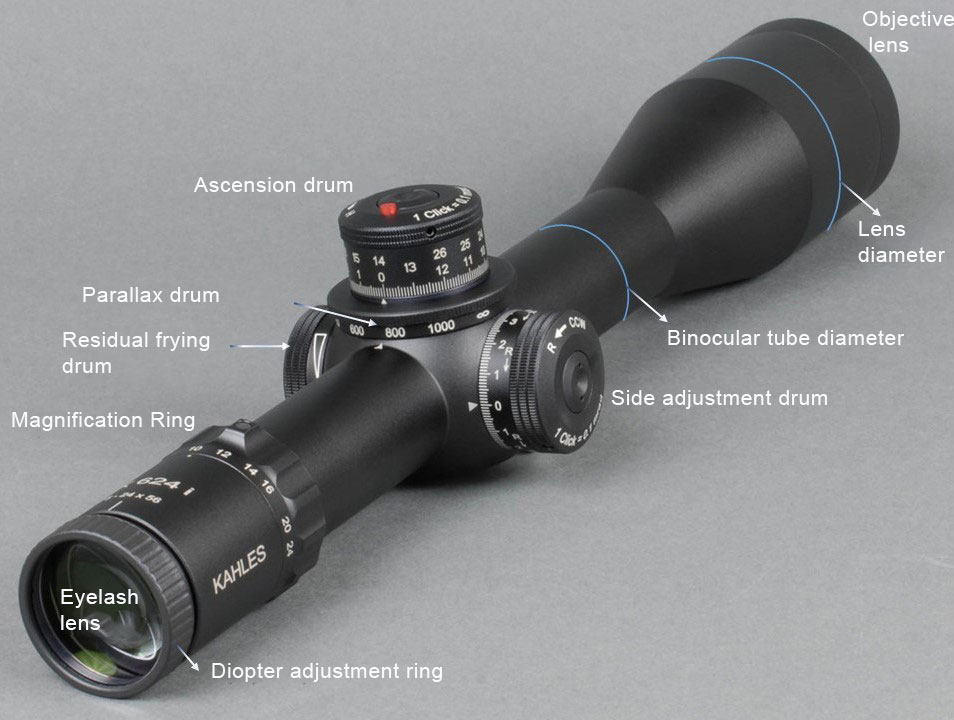
GMKA DEFENSE DESIGNS TECHNOLOGICAL SYSTEMS FOR SNIPERS
When examining the factors in geographical conditions such as wind, temperature, humidity, altitude, slope, and distance, we develop systems that utilize artificial intelligence to solve the challenges that arise from exposure to these conditions.
We equip rifle scopes with comprehensive and easily understandable information.
The Artificial Intelligence Sharpshooter Support System is mounted on the weapon or scope to provide AI-supported measurements of factors such as wind, humidity, pressure, slope, and distance. By analyzing real-time data and previously known weather events in the region, it calculates and transfers the precise aiming point to the scope for a flawless shot on the target. This system incorporates artificial intelligence and augmented reality in an electro-optical rifle scope.
We envision this as a plug-and-play platform that can be integrated into various rifles, including civilian smartphones’ features like navigation, communication, and fundamental data on environmental factors.
The miniature computer unit collects real-time data from the soldier’s field of view (detected by EO vision), tactical information, inputs from other team members, and rifle mechanical data. Similar to the helmets used by combat pilots, it presents embedded information as an augmented reality layer over the target for the soldier.
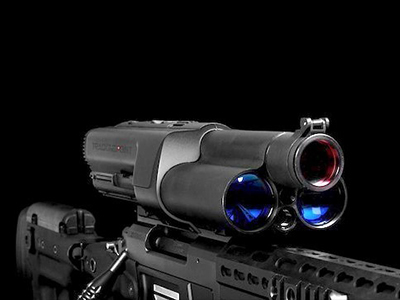
The system is equipped with artificial intelligence that supports its applications and can perform functions, including ballistic correction, to ensure the reticle is in the correct position. We are also continuing our efforts to advance its capabilities further.
This system utilizes military electro-optical technology, such as image intensified passive night vision targeting scopes, specifically designed to assist military snipers in detecting and engaging targets both at low and high altitudes. By using this advanced technology, military snipers can effectively locate and engage targets even in low-light or nighttime conditions.