


Technology is fundamentally changing the balance in warfare.
Microwaves have various industrial applications. Microwaves ovens, commonly found in our kitchens today, work on the principle of heating by moving the molecules of the microwave field that they emit. Similarly, high-powered magnetrons are used in the mining sector to separate minerals and ores from rocks. Microwave generators are also the sources of radars. However, the term HPMW (High-Power Microwave Weapons) is also present in warfare systems to the extent that it is synonymous with RF weapons.
Microwave frequencies can range from 100 MHz to 10 GHz and above. The main reasons for selecting these frequency values are the permeability of the atmosphere at these values and the susceptibility of electronic device components to damage or disruption at these frequencies due to their sensitive nature.
Microwave Weapons bombard targets with energy pulses between 300 to 300,000 megahertz. Directed energy affects electronic circuits, subjecting them to extreme loads. The higher the energy produced by the system, the higher the probability of electronic systems malfunctioning.
For defensive purposes, microwave weapons can ambush enemy vehicles and drones. If the unit carrying the weapon gets close enough to enemy units, it can disable them. Imagine the sudden deactivation of electronic systems in warplanes and ships.
A defense system based on microwave technology for base protection aims to disrupt and eliminate the performance of unmanned aerial vehicles or swarms of such vehicles.
Enabling “under-attack logistics,” including finding ways to protect military areas and strategically important civilian settlements, is one of the key priorities for Future Defense.
DIRECTED ENERGY WEAPONS, LASER AND MICROWAVE WEAPON SYSTEMS
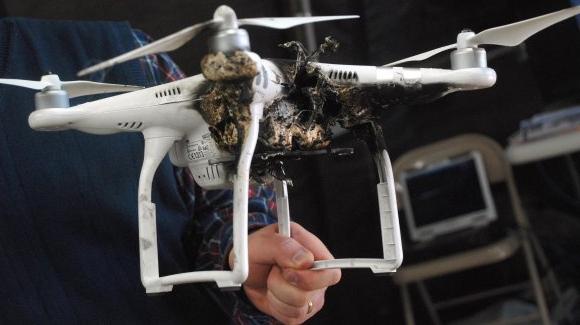
When considering possible direct energy weapon types and analyzing experiments conducted worldwide, the two most promising solutions are microwave weapons (High-Power Microwave – Directed Energy Weapon) and laser weapons (High-Energy Laser – Directed Energy Weapon).
Microwave Weapons
Working principle of microwave weapon system
It involves directing a microwave beam at a target (or a target group) at an appropriate frequency (usually 10 MHz ~ 100 GHz).
The amount of power we need to emit from the antenna to reach the target depends on other conditions: reflections, buildings, etc., including how far the target is and the distribution of power from the radiating antenna to the target itself.
However, it’s also dependent on other factors.
To understand how power is distributed in a microwave-type weapon system, it’s important to focus on some crucial qualitative directions beyond the details of calculations.
Losses from the power generator, losses from waveguides, and losses from propagation (proportional to the square of the distance to the target) are fairly well-known. Instead, focusing on the microwave source and, in relation to the microwave source, various available technologies, such as vacuum and solid-state technologies, have been divided.
– The frequency corresponding to the greatest effectiveness of microwaves is in the range of 300 MHz to 3 GHz.
– The repetition of pulses lasting from 100 ns to 1 µs is more effective than a continuous wave.
The microwave source, on which the power of the weapon relies, is the most critical technological component of a DEW (Directed Energy Weapon) system, representing a nation’s most distinct technological superiority.
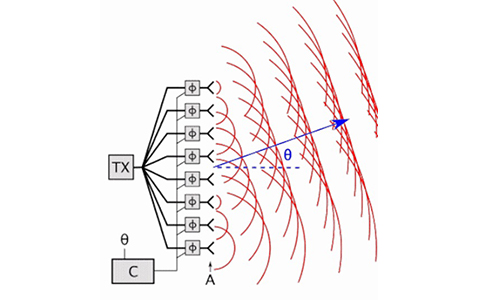
Microwave generators have been included in the list of sensitive subsystems that every state controls the development, production, and export of.
While this technology theoretically surpasses “vacuum” microwave generators, it offers a range of significant advantages, including but not limited to: 1) beam directionality and
2) power scalability (the more radiating elements, the more powerful the beam).
Laser:
The second type of directed energy devices is high-energy lasers.
Since laser cutting machines are already available at an industrial level, we are examining how a laser beam can be used to harm an enemy entity.
Unlike an HPM (High-Power Microwave) device that affects the circuits and subsystems of the entity, a laser works by heating a portion of the affected entity, and the key is to have as high a energy flow as possible.
If we reflect our laser pointer to a specific distance, it spreads over a small area to verify what the point inside looks like. If energy is concentrated enough over a short distance, it begins to dilute with increased distance.
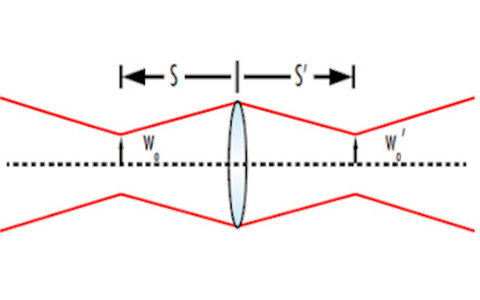
In fact, the flux of a laser behaves like a “Gaussian flux.” Despite having an optical system and being transparent enough not to be melted by the laser itself, it’s not possible to focus a laser below a certain theoretical limit.
The impact of atmospheric disturbances on a laser beam is due to the laser itself heating the air it strikes, inherently causing the medium through which the beam propagates to become disrupted.
For initial target detection, an infrared system
A low-power, multi-beam laser illumination system serves to determine the distance to the target and provide information about atmospheric conditions.
The kilowatt-class laser aims to illuminate the target appropriately by deforming the main beam and compensating for atmospheric effects, aiming to gather more accurate information about atmospheric turbulence.
The Tactical High Energy Laser is a short-range system that can be ground-based and mobile. We aim to thoroughly explore the issues of the laser system, which is not intended to be an operational weapon system, compare various technological solutions, and provide a range of solutions to minimize related problems.
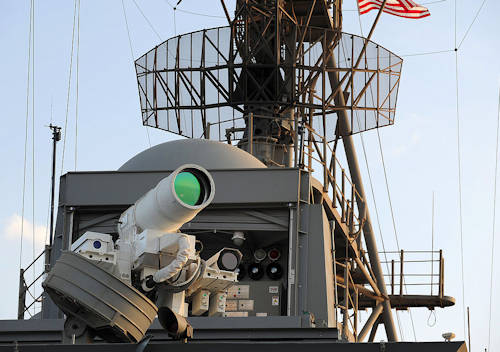
GMKA DEFENSE is a company that specializes in research and development. We are working on a weapon system designed to provide excellent protection to friendly forces against medium and short-range missile threats. With an effective range of 100 to 500 meters, this system can engage in multiple shots without requiring reloading, and it aims to become even more effective in longer ranges in the future.
OUR OBJECTIVE:
Our goal is to employ this system in the defense of military and strategically important areas against potential attacks, specifically countering threats posed by kamikaze drones and unmanned aerial vehicles (UAVs).