


GMKA DEFENSE IS THE FIRST AND ONLY MİNE DETECTION, DISPOSAL AND CLEARANCE COMPANY IN OUR COUNTRY
IT SUPPORTS THE DEMINING OF TURKEY’S BORDERS AS WELL AS OTHER WORLD COUNTRIES, PROMOTING STRONGER AND MORE HUMANE BORDER CONTROL.
Every year, hundreds of innocent people lose their lives or get injured due to landmines. Landmines not only cause individual suffering but also result in significant social and economic problems that hinder development. Actions related to landmines aim to reduce the effects caused by them and work towards establishing safe demined areas.
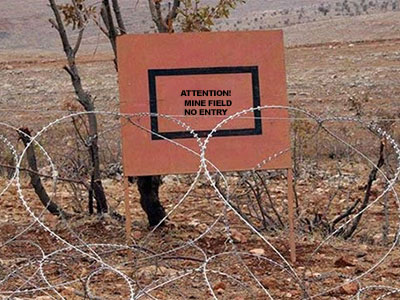
Minefield clearance includes mine clearance activities in accordance with international and national standards, covering quality assurance/control and cleaning.
Enhancing institutional capacity in border management involves focusing on the development of a risk analysis system with the goal of strengthening institutional capacity in border management, including providing training to public and military authorities.
A mine is a device that contains explosives designed to destroy or damage land vehicles, ships, or aircraft, injure, kill, or otherwise incapacitate personnel, and is typically placed within a protective casing. Mines can be detonated by passing over them, through time-delay mechanisms, or by remote control devices.
A sea mine is an explosive device that is either placed in the sea with the intent to damage or sink ships or to prevent ships from approaching a certain area.
Landmine
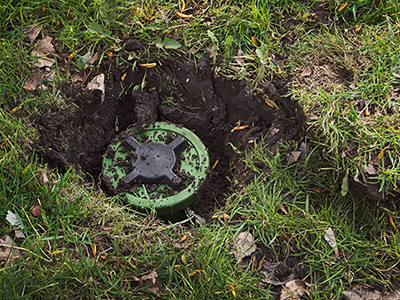
A landmine is a general term for explosive devices that are placed on or slightly under the ground, filled with explosive or chemical materials. A landmine generally detonates through the weight of passing vehicles or individuals.
Types of Landmines
Anti-Tank (AT) Mines; these are a type of landmine designed to damage or destroy tanks and armored vehicles. They contain more explosive material compared to anti-personnel mines.
The main types are:
- Pressure-fused
- Bounding fragmentation
- Stake-mounted
- Side attack
- Terrain

Landmines are known for their devastating impact on civilian populations and long-lasting effects on areas where they are deployed. Efforts to clear landmines are crucial for ensuring the safety and security of affected regions.

Anti-personnel mines are a type of landmine within the landmine class that is developed to target live human beings, unlike vehicle-targeting types like anti-tank mines.
Primary Types of Anti-Personnel Mines:
- Fragmentation and Stake-mounted
- Bounding fragmentation
- Partial delivery mine
- Pressure-activated mine
- Splashing mine
- Napalm mine
- Chemical mine
A conventional landmine consists of a case filled with a main charge. It has a spreading properties like a printing plate. This triggers a detonator or igniter, which initiates a boost charge. Handling restriction may be additional injections.
It’s important to note that anti-personnel mines have been widely criticized due to their indiscriminate nature, causing harm to civilian populations even long after conflicts have ended. Efforts have been made globally to ban and eliminate their use.

A landmine can be triggered by many things, including pressure, motion, sound, magnetism and oscillation. Anti-personnel mines usually use the pressure of a person’s foot as a trigger, but trigger wires are also often used. Most modern vehicle mines use a magnetic trigger to detonate even if the tires or tracks don’t touch it. Advanced mines can detect the difference between friendly and enemy types through a built-in catalog of signatures, IFF (Friend-Foe detection). This would theoretically allow friendly forces to use the mined area while blocking enemy access.
The anti-handling device will detonate the mine if someone tries to lift, slide, or disable it. The goal is to deter minesweepers by deterring attempts to clear minefields. As long as some mines have optional fuze pockets, there is some degree of overlap between the function of a booby trap and the function of an anti-carry device. Alternatively, some mines may mimic a standard design, but are actually intended to kill deminers such as the MC-3 and PMN-3 variants of the PMN mine. Therefore, the standard securing procedure for mines is usually to destroy them in situ without attempting to remove them.
GMKA MINE DETECTION AND DISPOSAL SYSTEM
MATTIS is a semi-autonomous system designed for mine scanning, detection, and disposal purposes that can be utilized with UAVs and UGVs (Unmanned Ground Vehicles). It is capable of making certain decisions on its own while also being controllable through remote command.
SYSTEM STRUCTURE
The suggested mechanical structure of the system is based on a four-wheeled drive system or can be adapted to utilize tank tracks, allowing it to work effectively on steeper terrains. The wheels are connected to the motors through a gear system.
Moreover, for UAVs, we aim to create a triggering mechanism weighing between 3-8 kg that adheres to military standards and can be used on various vehicles. The design has been conceived to minimize potential damage to the MATTIS system in case of mine detonation. To ensure quick restoration in the event of damage, a modular structure is employed. A wide range of methods is used for mine detection. The primary methods include manual search, electromagnetic induction (EMI), thermal imaging, ground-penetrating or probing radar (GPR), thermal neutron activation (TNA), and biosensors. To mitigate false alarms and the risk of failing to detect mines, two or three of these sensors are often used in conjunction. The information collected from these sensors is combined to determine the presence of a mine.
Electronic Structure
The electronic structure is based on a central decision-making mechanism and a system where each subcomponent (vision, motion, etc.) can perform its own tasks independently. Each subcomponent is equipped with an intelligent processor. The structure of the motion control unit is as follows: DC motors will be controlled by drivers. The motion control card will provide control signals to the drivers. The reference position will be provided to this card by the central processor. Various sensors are used for safety and navigation. The collection and evaluation of signals from these sensors will be carried out by units within the mainboard.
WORKPIECES OF THE SYSTEM
GMKA MATTIS has several key sub-packages, including:- Central Decision Mechanism
- Fusion of Data from Three Sensors
- Remote Control via Communication
- Motion Control
- Detection and Security
- Fault Diagnosis and Functioning in Case of Failure
- Energy Management
- Vision
- Mine Marking or Collection
The Central Decision Mechanism divides values into sub-packages to ensure the system operates according to the planned direction and adapts to new information from the remote control system. It notifies relevant units of these sub-tasks, evaluates the data they provide, and if necessary, reorganizes sub-tasks. The central decision mechanism follows a three-level architecture, where a planner, a group of behaviors and a timing expert system work in parallel. The planner calculates the necessary plan for the task at hand and provides it to the expert system. The expert system dynamically enables behaviors to execute the steps of the plan in sequence.
The fusion of data from three sensors involves the use of three different sensors for mine detection. These sensors could be Electromagnetic Induction, Thermal Imaging, Radar or Thermal Neutron Activation. This unit is responsible for evaluating the information from these sensors and making decisions about whether there is a mine or not. Depending on various mine types, different combinations of at least two of these sensors can be considered. We utilize a detailed database regarding mine structures.
Communication and remote control are essential for remote operation. Apart from RF communication, more advanced methods can be used if deemed necessary for security. In terms of communication security, secure protocols or encryption methods are being considered.
Motion Control is responsible for moving the system from its current location to a desired destination. This subunit is composed of three subcomponents: Trajectory Planning, Control, Slip Sensing
- Trajectory Planning
- Control
- Slip Sensing
These components work together to ensure that the system moves smoothly and accurately, following the intended trajectory, and can detect and respond to deviations or slippage as needed.
Detection and Security Given the high cost associated with equipping a robot with numerous sensors, it’s clear that compromising on security is not an option. This is where MATTIS ensures its own security. Fundamental security concerns include avoiding mine activation, avoiding collisions with trees or rocks, not falling into cracks, etc. Various sensors and algorithms are used to ensure security. Different sensors and algorithms are used to ensure security
Fault Diagnosis and Functioning in Case of Failure the system addresses various fault scenarios, including motor failure, excessive energy consumption, subunit malfunctions and sensor failures. Artificial neural networks and expert systems have been implemented for fault diagnosis to recognize these faults to a certain extent and enable the system to continue functioning by tolerating these faults.
Energy Management involves controlling and optimizing the control signals generated by the controller, adhering to the maximum speed and acceleration specified in the trajectory planning. This ensures prolonged operation of the system.
The system requires vision for perceiving its environment and providing target points for trajectory planning. Three-dimensional image processing is feasible. Image information can be sent to the remote control center, aiding its environmental perception and decision-making. Vision is composed of three main components: image processing, recognition, and classification.
Mine Marking or Collection This unit is responsible for dealing with detected mines. Mines can be neutralized in two ways. In the first method, the location of the mine is marked, and a collection device follows to retrieve it. In the second method, the mine is located, detached from its position, and collected.